Written by CITL Guest Contributor: Dee Anna Phares (University Libraries)
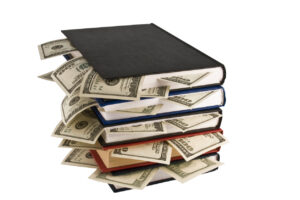
Everyone wants their students to be engaged and prepared not only to meet the requirements of their classes, but to lay a foundation for career success and lifetime learning. However, it’s hard to be engaged when you’re not prepared. And it’s hard to be prepared when you don’t have access to the required course materials because their price tag puts them out of reach. NIU’s Course Materials Affordability Task Force (CMA), a collaboration between CITL and the University Libraries, has some suggestions for faculty who want to find workarounds or alternatives to expensive course materials.
Request a Copy of a Textbook for Course Reserves
Gone are the days when publishers would send unsolicited desk copies of text s to instructors on the off chance they might adopt a book. But if you have already adopted a textbook, you can contact the publisher to see if they will send you a desk copy that you can put on Library Reserves.
If that is not possible, you also have another option: ask the University Libraries’ Textbook Purchase Program to buy a required text and place it on two-hour reserve for your students. Not all materials requested can be purchased. Selection is contingent on available funds, and priority is given to high-cost items that will be used for several semesters in high-enrollment courses. The Textbook Purchase Program does not buy texts with single-user codes, course packs, customized textbooks, loose-leaf or spiral-bound texts, or multiple copies of any item, but you can request materials for graduate or undergraduate courses. And if the Textbook Purchase Program is unable to fulfill your request, you can still talk to your Subject Specialist librarian about using your department’s library allocation to buy the book.
Make Use of an Existing Library Resource
 Library resources aren’t free; the University Libraries spend a great deal of money each year to provide their patrons with access to the books, journals, media, and databases they rely on. Students—and faculty—incur no additional cost for using these resources, so they offer many possibilities for supporting instruction. You can link to articles found in our databases, put books from our collections on Print Reserve, have articles or chapters scanned and put on Electronic Reserve, or link to library-licensed e-resources such as ebooks or films. Before assigning an ebook or streaming video from our collection, please consult with your Subject Specialist librarian to ensure the license hasn’t expired and that it allows for multiple user access.
Use Free or Open Educational Resources
Myriad free resources are available online—from YouTube videos and books on Project Gutenberg to artworks via the Digital Public Library of America—but while these can be used gratis in a classroom setting, they may still be protected by copyright, which limits how you can use them, and there is no guarantee they will be there when you need them. In the early days of the pandemic, many books and videos were provided to users at no cost. However, that did not last, and some faculty have scrambled to find alternatives.
Open Education Resources or OER are freely accessible materials with open licenses that allow you to retain, reuse, revise, remix, or redistribute them at no cost to your students. They provide opportunities for faculty to develop bespoke course materials to meet their specific instructional needs. You can get help finding or creating OER by consulting the Finding and Accessing Content for Courses: Free, Open, and Affordable Resources LibGuide or by talking to your Subject Specialist.
If you want to learn more about strategies for making your courses more affordable, consider joining a workshop presented by members of the Course Materials Affordability Task Force, such as the upcoming event, “Increase Access, Decrease Costs: Finding Low- or No-Cost Materials for your Course.” And if you want to become an advocate for course materials affordability on campus, consider joining the CMA!
