

STEM majors might kick off their careers with higher salaries, but research shows that humanities majors often catch up by mid-career, thanks to their adaptability and critical thinking skills—qualities that industries are valuing more and more these days (Goldfine, 2024). This highlights the growing need for interdisciplinary approaches to tackle complex problems that require creative, out-of-the-box solutions. Bringing STEM and the humanities together doesn’t just expand students’ skill sets—it also makes learning more enriching and prepares them for lasting success, both professionally and personally.
The Value of Interdisciplinary Learning
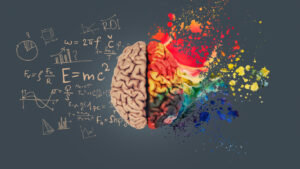 Student complaints about non-STEM general education courses are both misguided and short-sighted—STEM and humanities aren’t opposites; they actually complement each other (Bourdeau & Wood, 2019). One promising solution is “Humanistic STEM,” which blends scientific and technical studies with an emphasis on human welfare, values, and culture (Bourdeau & Wood, 2019; Bourdeau & Wood, 2021). This approach meets the growing demand for STEM graduates who are not only technically skilled but also creative, empathetic, ethical, and globally aware. Unlike STEAM, which typically emphasizes the arts, Humanistic STEM (H-STEM) prioritizes interdisciplinary collaboration and integration of perspectives across STEM and humanities (Bourdeau & Wood, 2021). Humanities courses encourage students to engage with nuanced issues and explore diverse perspectives, providing transformative learning experiences (MIT Open Learning, 2024). By studying both humanities and STEM, students can become well-rounded and globally aware graduates who think criticallyare ready to solve tomorrow’s toughest challenges with both technical expertise and ethical insight.
Humanities Complements STEM
Studying subjects like literature, history, and philosophy helps students build skills—like empathy, creativity, critical thinking, communication, and adaptability—that they will use throughout their careers (Goldfine, 2024; Cheema, 2022; Bourdeau & Wood, 2019). Abilities such as writing, oral communication, problem-solving, teamwork, ethical decision-making, sociopolitical reasoning, and leadership are critical for success and advancement in today’s ever-changing workplaces (Goldfine, 2024; Cheema, 2022; Bourdeau & Wood, 2019; MIT Open Learning, 2024). Humanities studies also spark curiosity, empathy, and global sensibility, while encouraging self-expression and helping students to feel connected to the broader world (Goldfine, 2024). They push students to think critically about abstract ideas and approach challenges from fresh perspectives, boosting their ability to solve complex issues in creative and innovative ways (Goldfine, 2024).
 Storytelling, for example, plays an important role in making technical work impactful. Whether crafting compelling grant proposals and journal articles, or communicating ideas in public and professional settings, being able to frame technical work within broader societal narratives is the key to advancing STEM research (Koblitz, 2017). Humanities disciplines like literature, history, and world languages can help STEM professionals develop the skill of storytelling, enabling them to link their work to the human experience and drive meaningful change. Humanities also contribute to STEM in practical ways, such as:
- Writing clear and persuasive scholarly articles or funding proposals
- Navigating ethical minefields in technology and AI
- Enhancing teamwork and leadership through empathy and effective communication
When STEM and humanities come together, students gain versatile skills that strengthen technical abilities while preparing them to approach challenges holistically and through a socially conscious lens.
STEM also Strengthens Humanities
 Humanities doesn’t just benefit STEM—the relationship works both ways. Bringing STEM into humanities studies allows students to blend technical skills with critical and creative thinking. For example, data analysis and visualization can help students dive deeper into historical trends, linguistic patterns, or cultural shifts. STEM tools also open the door to exciting digital projects like 3D modeling of historical artifacts, virtual reality experiences for cultural studies, or AI-assisted translation. These tools can even enhance storytelling with interactive timelines or digital narratives. Additionally, STEM can introduce humanities students to ethical dilemmas in technology, such as artificial intelligence and climate change, equipping them for interdisciplinary career opportunities where technical and ethical insights go hand in hand.
Challenges and Misconceptions
Some common misconceptions about integrating STEM and humanities include beliefs that “Humanities aren’t relevant to technical careers” and “STEM and humanities require separate skill sets.” These beliefs overlook how essential humanities are for fostering critical skills that STEM fields rely on, like communication, ethical reasoning, and creative problem-solving. While addressing these misconceptions is a key step, the bigger challenge lies in the logistics of creating and sustaining interdisciplinary programs.
 Building successful STEM-humanities programs requires collaboration between faculty, administrators, and other stakeholders. For example, team-teaching logistics require careful coordination to balance workloads and ensure meaningful engagement between disciplines. Developing flexible, innovative curricula also demands ongoing creativity and adaptability from educators. These efforts are only sustainable with continual budgetary support and institutional commitment to provide the resources and incentives needed for cross-disciplinary collaboration (Cheema, 2022; Bourdeau & Wood, 2021).
Challenges like budget constraints, rigid or insular departmental structures, and differing visions among faculty can hinder progress. However, potential solutions like encouraging team teaching to share the workload and foster cross-disciplinary collaboration, and creating flexible curricula to integrate STEM and humanities concepts can make a big difference. Ultimately, institutions need to foster a culture of innovation that values interdisciplinary programs and recognizes their long-term value in preparing students for a rapidly changing and increasingly interconnected world.
The Future of Humanistic STEM
 The future of Humanistic STEM lies in its potential to address global challenges, such as the rise of AI, climate change, and public health crises, by combining the critical and ethical insights of the humanities with the technical expertise of STEM. As technology continues to reshape industries and society, interdisciplinary education equips students with adaptability, communication, and critical thinking skills, essential qualities in an ever-shifting professional landscape. Investing in humanities and STEM together not only enhances students’ career prospects but also fosters personal growth, enabling students to connect their work to broader societal narratives and make meaningful contributions. Educators and institutions should champion interdisciplinary approaches to prepare students for the complex challenges of today and tomorrow. As faculty, you can start by exploring and advocating for interdisciplinary programs to embrace the intersection of STEM and humanities in your own discipline.
References
- Humanistic STEM: From Concept to Course (Bourdeau & Wood, 2021, Journal of Humanistic Mathematics)
- Integrating STEM & Humanities in Higher Ed (Cheema, 2022, Education New Frontiers)
- Measuring the impact of humanities on STEM-focused education (MIT Open Learning, 2024)
- What Is Humanistic STEM and Why Do We Need It? (Bourdeau & Wood, 2019, Journal of Humanistic Mathematics)
- Why the Humanities Are Good for Getting Ahead (Goldfine, 2024, Bowdoin College)
- Why STEM Majors Need the Humanities (Koblitz, 2017, The Chronicle of Higher Education)
