

In STEM, success is often measured by outcomes: grades, persistence, and graduation rates. When students who start with gaps in preparation ultimately perform as well as their peers, institutions mark the effort a success. The story sounds reassuring—hard work pays off, talent prevails. But this narrative conceals a critical question: What does it cost some students to catch up?
I know this cost personally.
Unpacking the success narrative
When I entered my first year in a chemistry program as an immigrant, first-generation college student, and woman in STEM, my transcript would eventually tell a success story: a perfect 4.0 first‑year GPA. What it didn’t show was the cost of that success. I attended every lecture and lab, yet struggled to understand what was being lectured on and never participated verbally. I tried to take notes, yet they were unintelligible in Vietnamese and broken English. I performed well on computational questions but struggled with conceptual understanding. Outside of class, I worked long hours to cover basic expenses. I had no car, no computer, and no internet at home. I also had no friends.
On my transcript, I looked like an exemplary student. In reality, I was exhausted—physically, mentally, and emotionally. I was full of doubt and not sure I belonged on a college campus.
Behind the GPA: the psychological toll
Now, as an educational developer and recovering chemistry professor, I have the opportunity to share my learning experience, explore evidence-based strategies, and apply them to inclusive teaching.
 Evidence suggests that catching up in STEM fields takes a psychological toll that grades alone don’t reflect. A large-scale study of first-year undergraduates in math-intensive STEM programs at ETH Zurich, a technological university in Switzerland, found that women entered university with significantly lower conceptual knowledge in mathematics and physics compared to men. However, by the end of the first year, their academic performance was nearly on par. They catch up…but at a cost: women reported substantially higher stress levels and greater uncertainty about their sense of belonging, even after accounting for differences in prior knowledge.
STEM research in the US shows that sense of belonging is a key predictor of persistence, motivation, and academic success, particularly for students from underrepresented or marginalized backgrounds. Belonging uncertainty—doubts about whether one fits in—shapes how students interpret everyday setbacks. A poor exam score or confusing lecture can feel like more than just a learning challenge; it can be perceived as confirmation that one does not belong. Over time, this uncertainty compounds stress and undermines resilience.
This “catching-up phenomenon” is concerning because it occurs alongside high performance. Students may succeed academically while experiencing chronic psychological strain. While stress and uncertainty about belonging don’t stop short-term success, they can impact persistence, ultimately influencing who stays in STEM and who leaves.
Evidence-based practices that reduce the psychological cost
Too often, STEM instruction treats learning as a purely cognitive enterprise: present material clearly and assess mastery rigorously. Yet decades of research in psychology and neuroscience demonstrate that emotions directly influence attention, memory, motivation, and persistence. Learning doesn’t happen in an emotional vacuum; it’s shaped by how safe, valued, and capable students feel as they engage with instructors, peers, and content.
 The good news is that the psychological cost of catching up isn’t inevitable—faculty can change it. By recognizing that social-emotional learning (SEL) and universal design for learning (UDL) share the goals of resilience, belonging, and equity, we can design courses that give students both the skills and structures they need to succeed. SEL aims to cultivate emotional and social skills that help students enhance their personal capacity to endure challenges, persist through difficulties, and ultimately thrive. UDL provides multiple ways to access content, engage with materials, and express understanding, creating a flexible learning environment that promotes success despite differences in students’ starting points.
Evidence‑based teaching approaches—such as clear learning goals, low-stakes assessments, structured peer interaction, and multiple ways to engage and demonstrate understanding—can reduce stress and uphold rigor. Interventions that normalize struggle as part of developing expertise and explicitly communicate belonging improve persistence and academic outcomes in STEM.
Belonging: The key to success
At Northern Illinois University, the BELONG in STEM Scholars program provides a supportive alternative to the “sink or swim” model prevalent in STEM education. Funded by the National Science Foundation’s S-STEM program, it combines financial support with community, peer networks, faculty mentorship, research opportunities, and professional development. This helps students, many of whom are first-generation or low-income, persist and graduate.
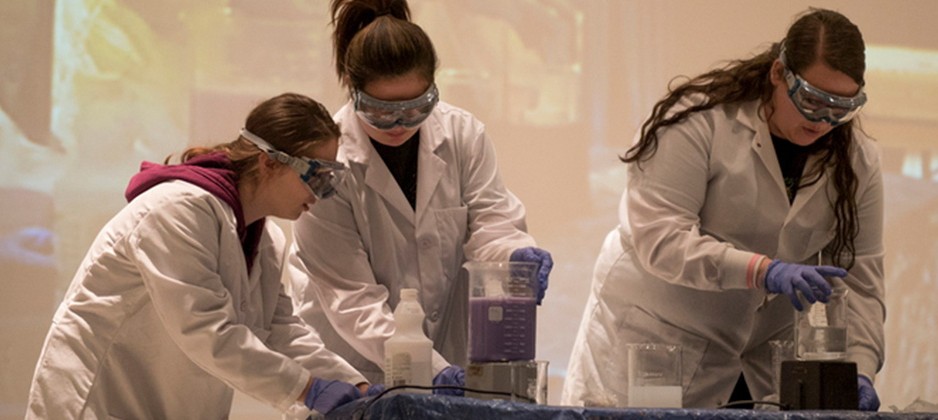
This program demonstrates that when belonging is integrated into STEM education, the hidden cost of catching up diminishes. Students develop a sense of identity as scientists and engineers. The program emphasizes that success in STEM isn’t just about perseverance, as overemphasizing it can push capable students to disengage, affecting not only them but also institutions and society.
A call to action for inclusive practices in STEM
It’s 2026, and we’re still striving to make STEM pathways both excellent and equitable. STEM courses must address the whole learner—intellectual, social, and emotional. Catching up shouldn’t be an act of silent suffering; with belonging, it doesn’t have to be.
References:
- Deiglmayr, A., Berkowitz, M., Rütsche, B., Dittmann, N., Schubert, R., & Stern, E. (2025). Catching up? Sex differences in prior conceptual knowledge, socio-emotional experiences, and academic achievements among STEM undergraduates. Learning and Individual Differences, 122, 102762. https://doi.org/10.1016/j.lindif.2025.102762
- Hansen, M.J., Palakal, M.J. & White, L. The Importance of STEM Sense of Belonging and Academic Hope in Enhancing Persistence for Low-Income, Underrepresented STEM Students. Journal for STEM Educ Res 7, 155–180 (2024). https://doi.org/10.1007/s41979-023-00096-8
- Cavanagh, S. R. (2016). The spark of learning : energizing the college classroom with the science of emotion. West Virginia University Press. Access through NIU Library here: The spark of learning : energizing the college classroom with the science of emotion – Northern Illinois University
- Lawrie, S. I., Carter, D. B., & Kim, H. S. (2025). A tale of two belongings: Social and academic belonging differentially shape academic and psychological outcomes among university students. Frontiers in Psychology, 15, 1394588. https://doi.org/10.3389/fpsyg.2024.1394588
