
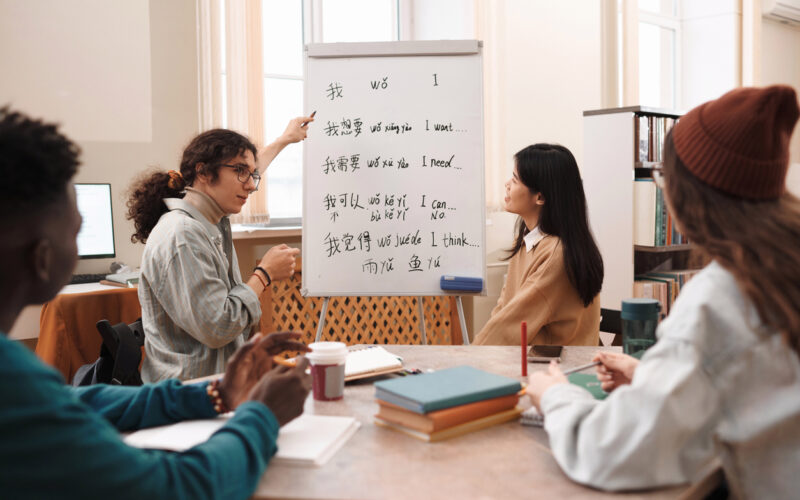
It’s not a new idea that students need to take an active role in their learning process to learn effectively and retain content over the long term. Simply sharing knowledge with them is not sufficient. While lectures may seem like a straightforward approach to teaching—and the most logical way to approach course content when teaching large groups of students in lecture halls—students who only experience lectures are often unprepared for assessments and end up cramming before exams. Let’s discuss some effective ways to reinforce content to help students remember content, understand how to apply it, prepare for assessment, and succeed in courses.
Practice information retrieval
Brain dump activities involve students writing down all the information they can recall on a given topic. These activities can help determine what information students are retaining and where there are gaps in understanding. Brain dumps can be incorporated into class time or students can use them on their own during study sessions.
Think, pair, share or peer-to-peer explanation activities encourage students to think critically and process information with others. Students who talk about what they’re learning are more likely to recall the information than when they hear it during lectures.
Regular low-stakes testing can prepare students for exams and help them assess their own learning. Students can then determine what areas they need to review and track their progress in the course. Low-stakes testing can be incorporated into class time or shared with students to help with studying outside of class meetings.
Share and model studying techniques with your students
Pomodoro sessions use a structured system of work and breaks are timed to encourage productivity and brain breaks. Students can use the Pomodoro technique when studying on their own, but it can also be incorporated into classes to move between tasks or schedule breaks during writing or labs.
Spaced practice prevents students from attempting to cram learning into a short period of time. Spacing out the review process with regularly scheduled study guides and activities gives students opportunities to revisit and practice previous lessons as well as new ones.
Dual coding helps students remember information by associating language with visuals. This information might come from lectures, videos, or students creating and sharing their own visuals and explanations.
Use authentic learning methods and opportunities for mistakes
Concrete examples help students understand information by seeing how it applies to real-life situations. When students can contextualize what they are learning and see the relevance of it, they are more likely to retain that information. This is especially true when it applies to their own lives, interests, communities, and cultures.
Authentic learning opportunities can help students demonstrate learning and recognize gaps in their understanding. This is an opportunity for students to practice, ask for help, and reflect on their understanding.
Correcting mistakes helps solidify information for students and demonstrates that learning is a process. Students might correct their own mistakes or the work of others to practice and help them understand the process.
Further Reading
- Academic Success Tip: Help Students Prepare for Final Exams by Ashley Mowreader
- Authentic Assessment from Indiana University Bloomington’s CITL
- The “Banking” Concept of Education by Paulo Freire
- Brain-based Techniques for Retention of Information from Loma Linda University
- Dual Coding from Nottingham Trent University
- 8 Evidence-Based Tips to Make Your Lectures More Engaging—and Memorable by Youki Terada
- Enhancing Learning Using Concrete Examples by Linda Love
- 5 Indispensable Ways to Deepen Student Comprehension by Youki Terada
- The Magic of Mistakes from UC Santa Barbara’s Office of Teaching and Learning
- Multitasking Harms Recall—Music, Not So Much by Youki Terada
- The Pomodoro Technique Explained by Brian Collins
- 7 Ways to Get Retrieval Practice Right by Andrew Boryga
- 6 Evidence-Based Instructional Practices Drawn from Cognitive Science by Javier Arguello & Natalie Young
- Spaced Practice from UC Sand Diego’s Department of Psychology
- 21st-Century PD: Retention, Reflection, and Redistribution of Knowledge by Bob Dillon
- The Value of Using Tests in Education as Tools for Learning—Not Just for Assessment by Dillon H. Murphy, Jeri L. Little & Elizabeth L. Bjork
- Why Students Forget—and What You Can Do About It by Youki Terada
- Why We Should Embrace Mistakes in School by Amy L. Eva
