
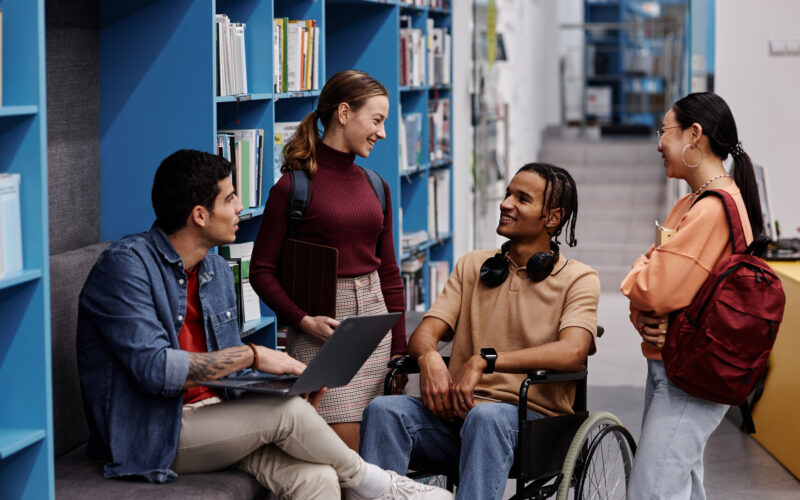
It’s natural for students to feel hesitant about working in groups—juggling communication, responsibilities, and schedules isn’t easy. Yet collaboration is a powerful skill that supports academic success and prepares students for future careers. With the right guidance, we can help students make the most of collaborative learning opportunities.
Why Incorporate Collaboration?
Incorporating student collaboration benefits not only individual learners but also the larger learning community. Collaboration increases student engagement by encouraging learners to take an active role in the learning process. When students teach or support one another, they reinforce their understanding, improve information retention, and strengthen critical-thinking skills. Additionally, collaboration promotes inclusion by helping students build connections with classmates and develop a stronger sense of community. It also creates opportunities for quieter or marginalized students to participate in ways that feel more accessible and supportive.
When to Incorporate Collaboration
Deciding when to include collaborative activities depends on the objectives and pace of your course. Whether students are getting to know each other, learning new content, or preparing for assessments, there are collaborative strategies that can support their learning. From short, low-stakes activities that take just ten minutes to semester-long projects, you can incorporate collaboration in ways that align with your goals and available time.
Ideas for Collaborative Activities
- Community agreement-building
- Think-pair-share
- Group problem-solving
- Authentic learning opportunities (case studies, simulations, field work, real-world activities)
- Peer instruction
- Peer review
- Collaborative note-taking
How to Incorporate Collaboration
To help collaborative work run smoothly, build support into the course. Establishing explicit expectations and clear assessment parameters helps students understand their roles, stay accountable, and engage more fully in the collaborative process. Strategies for integrating collaboration into your course effectively include:
- Providing explicit instructions and expected outcomes
- Defining roles (facilitator, recorder, presenter) when helpful
- Establishing guidelines for communication, deadlines, and conflict management.
- Co-creating norms with students to encourage ownership
- Using deliverables that combine individual work (reports, quizzes) and group work (final products)
- Including rubrics that evaluate both the process and product
- Using peer- and self-assessment to determine student contributions
Benefits Beyond the Classroom
Students’ ability to work with others and manage interpersonal relationships and workload will serve them beyond the classroom. The National Association of Colleges and Employers (NACE) identifies collaboration as an essential skill for the workplace. Collaborative activities provide students with regular practice in communication, teamwork, and leadership. They also help students learn to navigate differing viewpoints, coordinate tasks, and contribute to shared goals—skills that support their academic growth and prepare them for future professional responsibilities.
Further Reading
- Building a Culture of Classroom Collaboration by James Paterson in NEA Today
- Co-Creating the Classroom: Collaborative Ground Rules for Engaged Learning by Angela Rodriguez Mooney in Faculty Focus
- Collaborative Learning from Cornell University’s Center for Teaching Innovation
- Collaboration Is Key for Flexible Learning Environments in EdTech: Focus on Higher Education
- The Collaborate Toolkit: a Guide for Teaching & Assessing Collaborative Skills from Seattle Central College
- Collaborative Learning Enhances Critical Thinking by Anuradha A. Gokhale in the Journal of Technology Education
- Faculty/Staff Career Readiness Toolkit from NIU’s Career Services
- Giving Students a Say: Smarter Assessment Practices to Empower and Engage by Myron Dueck, published by ASCD
- Learning with Others: Collaboration as a Pathway to College Student Success from Clifton Conrad and Todd Lundberg, published by Johns Hopkins University Press
- Teamwork from the National Association of Colleges and Employers
- Using Collaborative Learning to Elevate Students’ Educational Experiences by George Ojie-Ahamiojie in Faculty Focus
- Ways to Incorporate Peer-to-Peer Learning in Your Classroom from the University of Michigan’s LSA Learning & Teaching Technology Consultants
