
Someone said you’re an SME, but what does that even mean? In the instructional design field, our faculty are highly regarded subject matter experts (SME). While you’ve undoubtedly accrued a wide array of knowledge and insight, we also know it’s no simple task designing an effective, engaging online course. So, where should you begin?
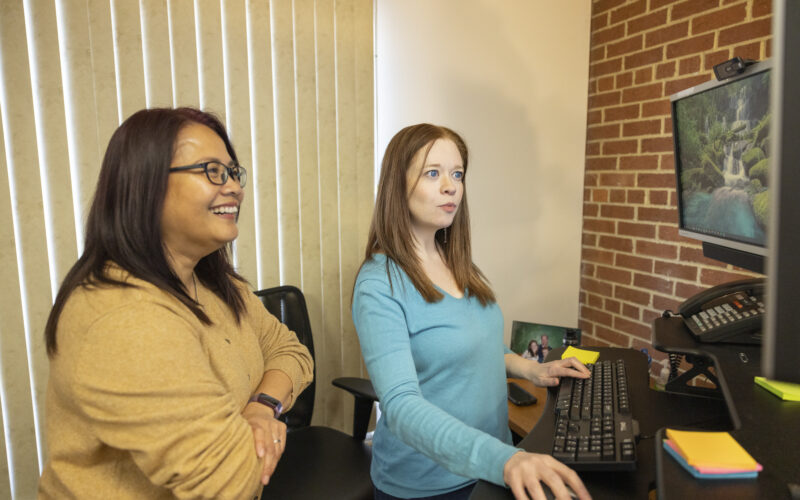
I met with Christiane Ong-McCarthy, a Senior Instructional Designer (ID) in NIU’s Center for Innovative Teaching and Learning (CITL), to discuss her role. Credited with 23 years of industry experience and designing more than 100 online courses, Christiane says, “I see myself as a partner.” According to her, course development can be a rewarding, collaborative process.
You Do What?
Let’s address the elephant in the room. Not everybody understands the instructional design partnership. It’s not uncommon for faculty to fear that someone will criticize their teaching, or worse, tell them how to run their course.
Christiane explains this couldn’t be further from the truth. “We are here to provide recommendations. We’re here to help, but we’re not here to dictate,” she says. While faculty make all of the content decisions, instructional designers are tying all the course components together to enhance the learning experience for students.
Everything an instructional designer (ID) recommends is grounded in pedagogy and years of research. If an ID suggests that you divide your long lecture recording into a series of shorter videos, it’s not a criticism of your lecture material. As Christiane assures me, it’s a recommendation based on best practices and research on how long students engage with their videos.
Instructional Design Superpowers
Although IDs are proficient with learning management systems, such as Blackboard, and they can help you with tasks such as setting up a gradebook and navigating your course, they have other skills, as well. When you work with an ID, it may feel like you’re partnering with a real-life superhero.
Christiane explains IDs often wear a variety of capes (so to speak), including:
- Project Manager: Develops a timeline and guides faculty through a course design document to ensure the course is ready for launch. Ideally, the course build process will take place over a span of 6 months.
- Pedagogical Specialist: Offers advice on best teaching practices, such as meeting Regular and Substantive Interaction (RSI) federal requirements and incorporating engagement techniques.
- Multimedia Developer: Edits audio and PowerPoint slides for lecture presentations, designs customized PowerPoint templates, and embeds multimedia into the course.
- Accessibility Checker: Reviews all course content to meet federal accessibility requirements (e.g., examines color contrast, text readability, navigation concerns, etc.)
- Course Builder: Develops a course template in Blackboard and builds the learning activities, such as exams, assignments, and discussion boards.
- Partner: Provides continued support once the course goes live (e.g., troubleshooting and answering questions, and debriefing with faculty once the course has been completed).
Sharing the Wisdom
While Christiane typically partners with faculty who are designing courses for fully online programs, she offers advice for anyone beginning the course design process. “Ask yourself, “What are [the] course learning outcomes? What do I want students to achieve?”
Christiane shares that the first step in creating quality online courses is to make sure you have “measurable, observable, and learner-centered objectives.” When you write down precisely what students will be able to do, all the other course elements begin to fall into place.
Although the work of an ID does not always take “center stage,” Christiane assures me new projects are always unfolding. Having just completed designing an 8-week general education course, she’s now reviewing a faculty member’s online course for the Quality Essentials recognition. Regardless of the task at hand, Christiane says her commitment is always to helping “students achieve their learning outcomes.”
For more information on Course Design Partnerships, visit our CITL webpage.
